The Space Rock That Crashed Into Legal History — And Started a Property War
When a meteorite smashed through Ann Hodges' roof in 1954, she became the first person ever struck by space debris. Then lawyers got involved, and things got really weird.
Category
21 articles
When a meteorite smashed through Ann Hodges' roof in 1954, she became the first person ever struck by space debris. Then lawyers got involved, and things got really weird.
When federal time zone boundaries split a rural Indiana community down the middle, residents solved the problem by simply operating their post office and businesses on different clocks. The arrangement confused Washington for decades.
In 1954, a single transposed digit in a Bureau of Land Management auction document legally transferred 9,847 acres of federal grazing land to wheat farmer Ernest Kowalski for $127. The government's attempts to reverse the sale led to a landmark court case that changed federal land policy forever.
Colma, California built its entire economy around being dead — literally. With 17 cemeteries and only 1,500 living residents, this town discovered what happens when your business model is eternal rest but regulations aren't.
When Angeles Duran discovered a loophole in international space law, she did what any reasonable person would do: she legally claimed ownership of the Sun and announced plans to charge humanity rent. The scariest part? Her paperwork was completely legitimate.
A simple trademark application and an overworked government office nearly gave one man legal ownership of the word 'candy.' Major companies received cease-and-desist letters before anyone realized what had happened.
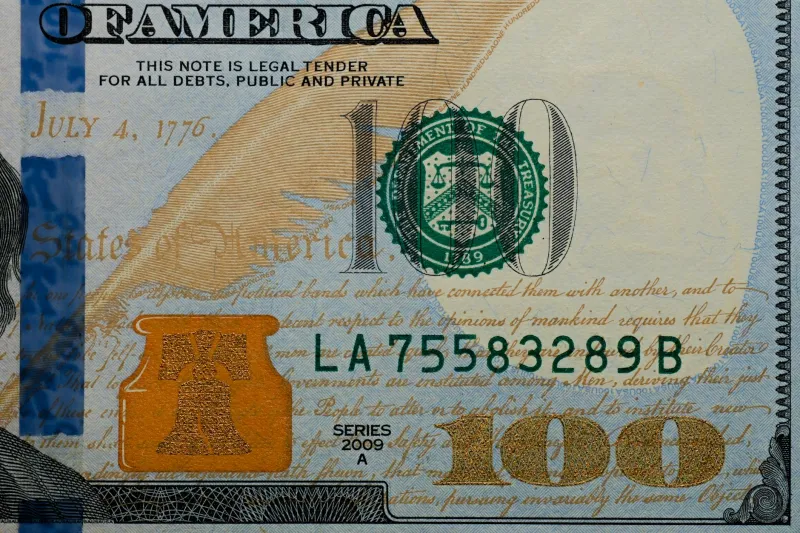
In the 1990s, a counterfeiter produced fake $100 bills so perfect that the Secret Service concluded it was easier to change real money than catch him. His forgeries were so flawless that some are still circulating undetected today.
The Great Chicago Fire of 1871 destroyed four square miles of the city and left 100,000 homeless, but the person allegedly responsible faced no consequences. The legal system simply had no framework for prosecuting negligence on that scale.
A catastrophic industrial accident in 1920s Chicago killed dozens and poisoned an entire neighborhood. The cleanup effort accidentally solved a problem engineers had been struggling with for decades: how to safely refrigerate American homes.
A California entrepreneur discovered a loophole in international space law and legally claimed ownership of the moon, Mars, and most planets in our solar system. He's been selling extraterrestrial property deeds for over 40 years — and three U.S. presidents are among his customers.
Charles Adler Jr. solved a simple traffic problem in 1954 and accidentally created the most universally recognized shape on Earth. Then he spent decades watching millions of people steal his design while he never earned a penny from it.
In 1886, an Atlanta pharmacist desperately trying to kick his morphine addiction created what he thought was just another headache remedy. Instead, he accidentally invented the world's most recognizable drink — one that would eventually be sold everywhere except North Korea and Cuba.
Walter Jaeger thought he was building the perfect poison gas detector in 1930s Switzerland. Instead, his spectacular failure and poorly-timed smoke break created the device that's now required by law in virtually every American home.
When Hyattsville, Maryland decided to tax coal dust in 1887, neighboring towns thought they'd lost their minds. Turns out, the joke was on everyone else when this bizarre tax turned a struggling municipality into the region's wealthiest.
A Raytheon engineer's melted chocolate bar in 1945 led to the invention of the microwave oven. What started as a workplace accident became the appliance that now sits in 90% of American homes.
In 1856, Congress passed a law allowing any American citizen to claim uninhabited islands for the United States — but only if they contained valuable bird droppings. This bizarre legislation quietly expanded American territory to nearly 100 islands worldwide, some still technically owned by the U.S. today.
The U.S. Navy spent decades training bottlenose dolphins to detect enemy divers and protect nuclear submarines. The program worked so well that it's still classified today.
In the early 1900s, creative American families discovered they could mail their children to relatives cheaper than buying train tickets. Postal workers dutifully delivered the kids, following regulations that nobody had thought to write properly.
Since the 1930s, the federal government has written checks to American farmers specifically for not farming their land. What started as a Depression-era emergency measure became one of the longest-running programs in U.S. history—and it's still paying out today.
In 1859, a former railroad conductor drilled a well in rural Pennsylvania looking for fresh water and struck something far more valuable. What happened next was chaos, fortune, and the accidental birth of the modern oil industry.
Violet Jessop was a stewardess and nurse who worked aboard all three of the White Star Line's sister ships — and managed to be present for the worst disaster each one suffered. The Titanic sank. The Britannic sank. The Olympic collided with a warship. Violet walked away from all of it and kept showing up for work.